
Allan R. Sandage
November 18, 2010 When I was in graduate school, if you asked me the age of the universe, I would have answered 17 billion years. That was Allan Sandage's best estimate at the time, and it was the number everyone quoted. Over the years, this number steadily decreased, and now we have a value of 13.75 ± 0.17 billion years. This age and its estimated error are quite remarkable, since astronomers in the early part of the twentieth century thought that the universe was less than two billion years old, and previous estimates were just a few thousand years. Allan R. Sandage died on November 13, 2010, at age 84.[1-7] Since he was born on June 18, 1926, he lived 30,829 days, or 84.407 years. If we define 84.407 years as a new constant, the "Sandage," then the universe is about 1.62 x 10⁸ Sandage units old.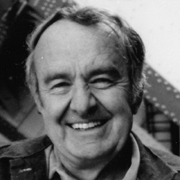 Allan R. Sandage
(Photo: Carnegie Observatories, Carnegie Institution for Science)
Sandage's career development was likely aided by several factors. His father was a professor at Miami University of Ohio. The dark night skies of Ohio got him interested in stargazing, his father bought him a quality telescope, and he started logging sunspot numbers. His service in the Navy during World War II gave him experience in electronics. After the war, Sandage obtained his undergraduate degree in physics at the University of Illinois.
Sandage's career as chronologist of the universe began in 1949, when he was a graduate student at the California Institute of Technology working for Edwin Hubble of the eponymous Hubble constant and Hubble Space Telescope. Hubble had planned a survey to update the value of his Hubble constant using the 200-inch telescope at the Mount Palomar Observatory, but he died in 1953 before he could start. Sandage, his heir apparent, undertook the task right after completing his Ph.D. under Walter Baade. Baade had investigated Cepheid variables, which were standard candles for Hubble constant determination, in the Andromeda Galaxy, and his new observations had increased the measured age of the universe from 1.8 to 3.8 billion years. By 1958, Sandage had revised the Hubble constant downwards from 250 kilometers per second per megaparsec (km/s/Mpc) to 75 km/s/Mpc, thereby increasing the measured age of the universe to about 13 billion years. He later estimated a Hubble constant of 55, giving an age of almost 20 billion years, but such estimates now need to be viewed in light of the accelerated expansion conjectured to be caused by dark energy.[2] The value consistent with the cosmic microwave background radiation is 72 km/s/Mpc.[3]
The age of the universe wasn't the only question that Sandage tried to answer. Another was the fate of the universe. Depending on whether the expansion is slowing or accelerating, we'll eventually have a universe that shrinks to a "Big Crunch" that's complementary to the Big Bang; or we'll have a universe in which galaxies become more distant. In 1961, Sandage published an influential paper in The Astrophysical Journal, "The Ability of the 200-inch Telescope to Discriminate Between Selected World Models," in which he discussed how Hubble constant measurements could be used to settle the question. By 1975, he was convinced that the universe would expand forever, an idea consistent with the observation at the time that there was not enough matter in the universe for it to be gravitationally bound.[3] Nowadays, with the discovery of dark matter and dark energy, cosmological models have become more complicated. This necessitates that correction factors must be applied to Hubble constant data, as shown in the figure, making the universe slightly younger than Sandage had envisioned it. However, the expansion of the universe does appear to be accelerating and will expand forever, proving Sandage correct on that point.
Allan R. Sandage
(Photo: Carnegie Observatories, Carnegie Institution for Science)
Sandage's career development was likely aided by several factors. His father was a professor at Miami University of Ohio. The dark night skies of Ohio got him interested in stargazing, his father bought him a quality telescope, and he started logging sunspot numbers. His service in the Navy during World War II gave him experience in electronics. After the war, Sandage obtained his undergraduate degree in physics at the University of Illinois.
Sandage's career as chronologist of the universe began in 1949, when he was a graduate student at the California Institute of Technology working for Edwin Hubble of the eponymous Hubble constant and Hubble Space Telescope. Hubble had planned a survey to update the value of his Hubble constant using the 200-inch telescope at the Mount Palomar Observatory, but he died in 1953 before he could start. Sandage, his heir apparent, undertook the task right after completing his Ph.D. under Walter Baade. Baade had investigated Cepheid variables, which were standard candles for Hubble constant determination, in the Andromeda Galaxy, and his new observations had increased the measured age of the universe from 1.8 to 3.8 billion years. By 1958, Sandage had revised the Hubble constant downwards from 250 kilometers per second per megaparsec (km/s/Mpc) to 75 km/s/Mpc, thereby increasing the measured age of the universe to about 13 billion years. He later estimated a Hubble constant of 55, giving an age of almost 20 billion years, but such estimates now need to be viewed in light of the accelerated expansion conjectured to be caused by dark energy.[2] The value consistent with the cosmic microwave background radiation is 72 km/s/Mpc.[3]
The age of the universe wasn't the only question that Sandage tried to answer. Another was the fate of the universe. Depending on whether the expansion is slowing or accelerating, we'll eventually have a universe that shrinks to a "Big Crunch" that's complementary to the Big Bang; or we'll have a universe in which galaxies become more distant. In 1961, Sandage published an influential paper in The Astrophysical Journal, "The Ability of the 200-inch Telescope to Discriminate Between Selected World Models," in which he discussed how Hubble constant measurements could be used to settle the question. By 1975, he was convinced that the universe would expand forever, an idea consistent with the observation at the time that there was not enough matter in the universe for it to be gravitationally bound.[3] Nowadays, with the discovery of dark matter and dark energy, cosmological models have become more complicated. This necessitates that correction factors must be applied to Hubble constant data, as shown in the figure, making the universe slightly younger than Sandage had envisioned it. However, the expansion of the universe does appear to be accelerating and will expand forever, proving Sandage correct on that point.

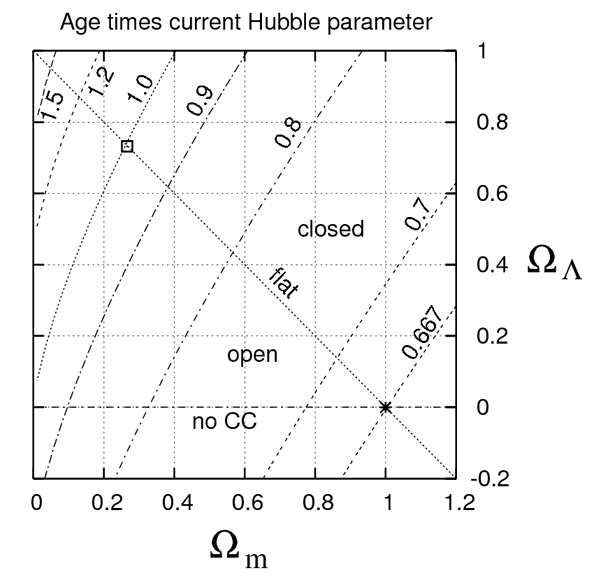 Cosmological corrections to the age of the universe. The age of the universe is calculated based on Ωm, the current fractional matter density (about 25%), and ΩΛ, the cosmological constant density. The value derived from Wilkinson Microwave Anisotropy Probe data is denoted by the box.
The Hubble constant wasn't Sandage's lone interest. In 1960, along with Thomas Matthews, he made the first optical identification of one of the newly discovered compact radio sources that later became known as quasars. The name quasar, short for quasi-stellar object, was well off the mark, since these were found to be not like stars at all, but the very active nuclei of galaxies at the far limits of the universe.[1] In his later years he used the Hubble Space Telescope, named after his mentor, to examine Type Ia supernovae in other galaxies as standard candles for Hubble constant determination.[6] This class of supernovae are ideal for this task, since they are very luminous, and they have a characteristic light decay curve.
Sandage published more than 500 scientific papers. His final paper is on RR Lyrae variable stars, another standard candle, in the October 10, 2010, issue of The Astrophysical Journal.[8] Sandage was given many awards, including the Eddington Medal of the Royal Astronomical Society, the Elliott Cresson Medal of The Franklin Institute, the US National Medal of Science and the Crafoord Prize of the Royal Swedish Academy of Sciences.[2] The later award, which carries a monetary award of two million dollars, is of the same class as the Nobel Prize.[3]
Cosmological corrections to the age of the universe. The age of the universe is calculated based on Ωm, the current fractional matter density (about 25%), and ΩΛ, the cosmological constant density. The value derived from Wilkinson Microwave Anisotropy Probe data is denoted by the box.
The Hubble constant wasn't Sandage's lone interest. In 1960, along with Thomas Matthews, he made the first optical identification of one of the newly discovered compact radio sources that later became known as quasars. The name quasar, short for quasi-stellar object, was well off the mark, since these were found to be not like stars at all, but the very active nuclei of galaxies at the far limits of the universe.[1] In his later years he used the Hubble Space Telescope, named after his mentor, to examine Type Ia supernovae in other galaxies as standard candles for Hubble constant determination.[6] This class of supernovae are ideal for this task, since they are very luminous, and they have a characteristic light decay curve.
Sandage published more than 500 scientific papers. His final paper is on RR Lyrae variable stars, another standard candle, in the October 10, 2010, issue of The Astrophysical Journal.[8] Sandage was given many awards, including the Eddington Medal of the Royal Astronomical Society, the Elliott Cresson Medal of The Franklin Institute, the US National Medal of Science and the Crafoord Prize of the Royal Swedish Academy of Sciences.[2] The later award, which carries a monetary award of two million dollars, is of the same class as the Nobel Prize.[3]

References:
- Thomas H. Maugh II, "Allan R. Sandage dies at 84; cosmologist focused on the age of the universe," Los Angeles Times, November 17, 2010.
- Eugenie Samuel Reich and Ivan Semeniuk, "Allan Sandage, surveyor of the cosmos, dies at 84," Nature Blogs, November 15, 2010.
- Dennis Overbye, "Allan Sandage, Astronomer, Dies at 84; Charted Cosmos's Age and Expansion," New York Times, November 17, 2010.
- S.C. Kavassalis, "Allan Sandage (1926 - 2010)," PLOS Blogs, November 16, 2010.
- Julianne Dalcanton, "The Passing of Allan Sandage," Cosmic Variance Blog, Discover Magazine, November 15, 2010.
- Keith Cooper, "Allan Sandage, 1926-2010," Astronomy Now, November 16, 2010.
- Allan R. Sandage, Edwin Hubble’s former observing assistant and one of the most prominent astronomers of the last century, died November 13, 2010, at home in San Gabriel, California, of pancreatic cancer, Carnegie Institution for Science News Release, November, 2010.
- Allan Sandage, "Amplitude Fine Structure In The Cepheid P-L Relation. I. Amplitude Distribution Across The Rr Lyrae Instability Strip Mapped Using The Accessibility Restriction Imposed By The Horizontal Branch," The Astrophysical Journal, vol. 722, no. 1, October 10, 2010, p. 79ff.
- Universe 101, NASA Web Site
- Eugenie Samuel Reich and Ivan Semeniuk, "Allan Sandage, surveyor of the cosmos, dies at 84," Nature Blogs, November 15, 2010.